Co-funded by the European Union. Views and opinions expressed are however those of the author(s) only and do not necessarily reflect those of the European Union or the European Education and Culture Executive Agency (EACEA). Neither the European Union nor EACEA can be held responsible for them. -- Project Number: 2025-1-DE01-KA220-HED-000359277 --
Press & Media

The DAI project partnership made contacts with web sites focusing on the field of school education. The DAI project was presented to the web masters and a link to The DAI project portal was made so that those who will access the selected web sites can also access, through a direct link, the The DAI project portal.

Press

Found 0 links

Found 21 links

Exchange Links

Pixel

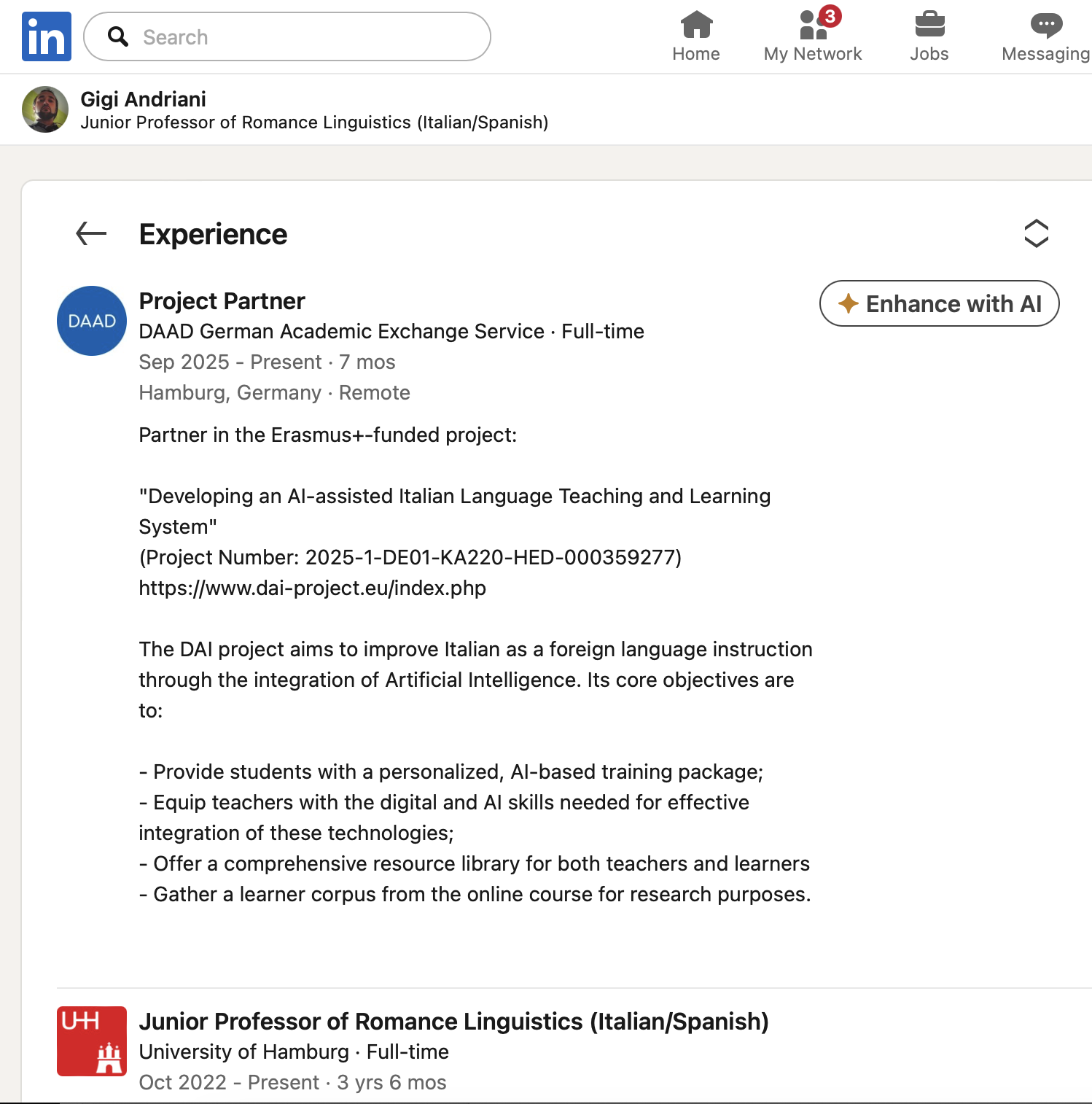
The European project entitled DAI - Developing an AI-assisted Italian Language Teaching and Learning System has been written and coordinated by the project applicant University of Frankfurt (Germany) in cooperation with the University for foreigners of Perugia and Pixel. The project was funded by the Erasmus+ Programme, Cooperation partnerships in Higher Education. The DAI project has the aim to improve Italian as a foreign language instruction through the integration of AI.


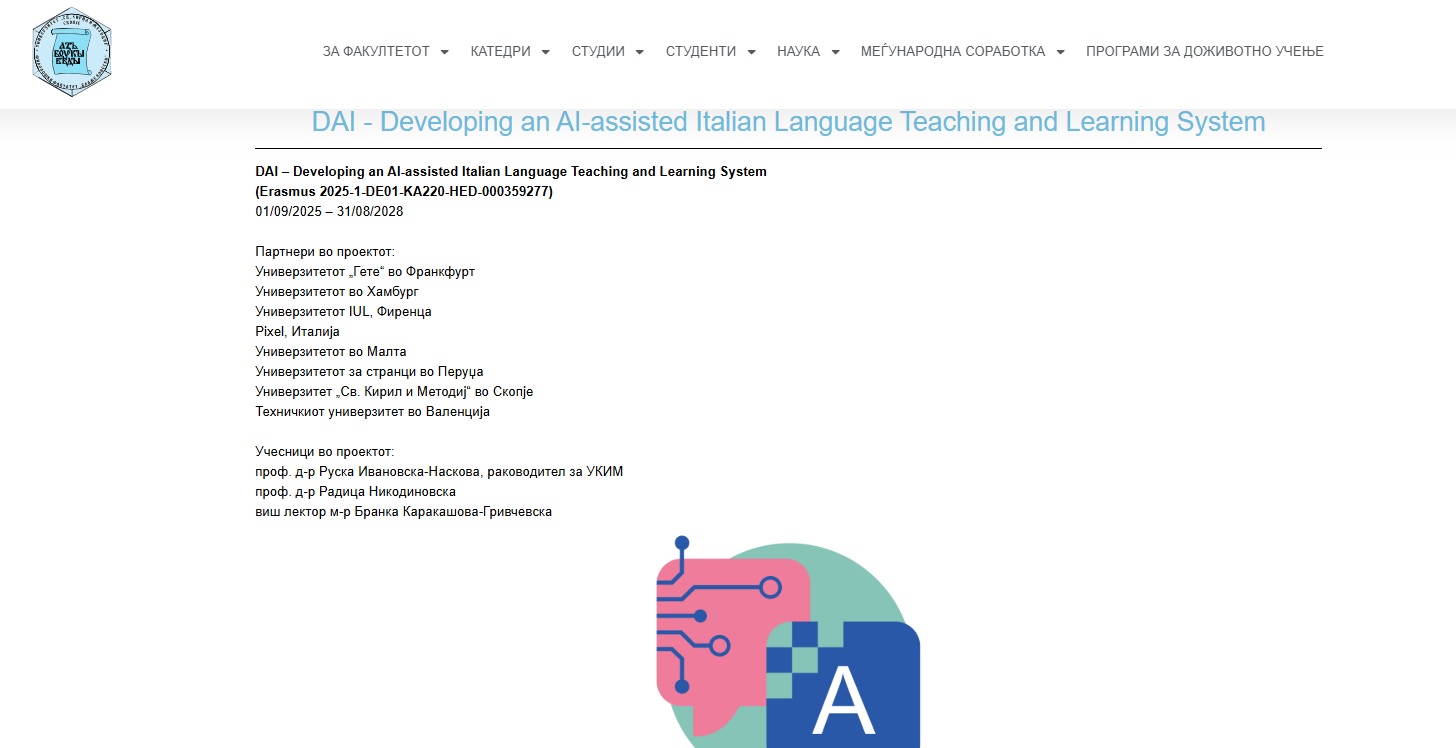
Ss. Cyril and Methodius University in Skopje

The DAI webpage of Ss. Cyril and Methodius University in Skopje presents the project’s partners and participants and includes a direct link to the DAI portal


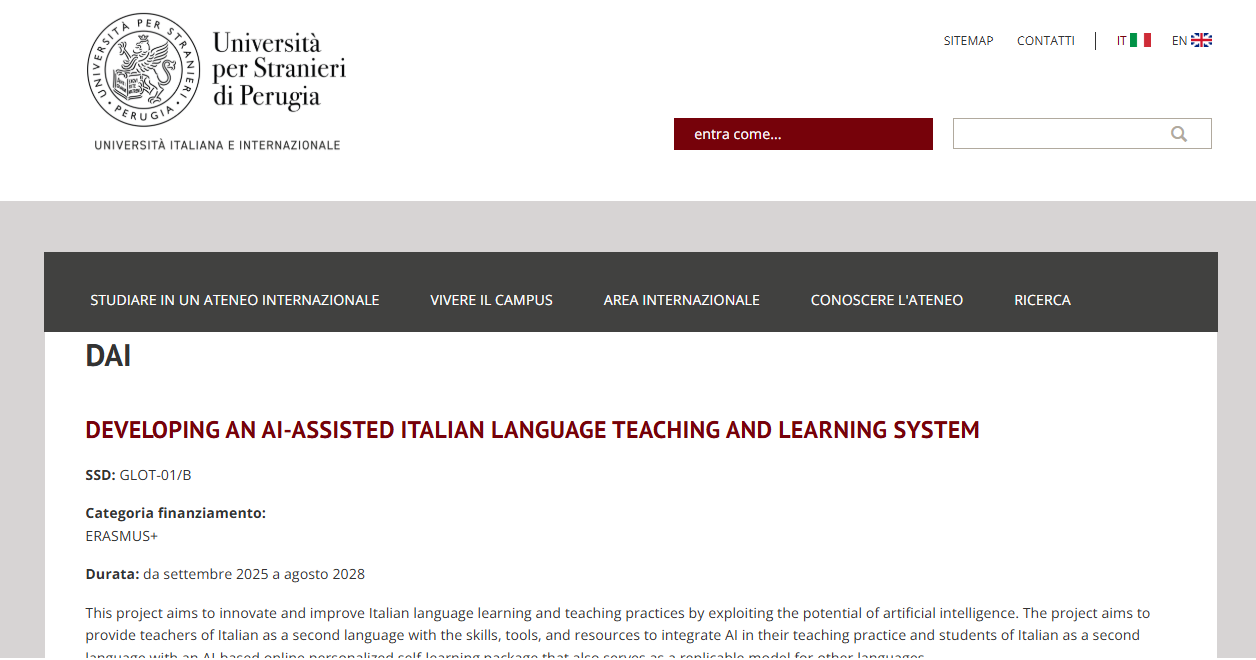
Università per Stranieri di Perugia

Università per Stranieri di Perugia is a partner in the DAI project. The University website presents the aims and activities of the project and includes a direct link to the DAI portal (https://www.dai-project.eu/). The page is regularly visited by international and Italian students, language teachers, researchers and institutional partners interested in language education and international cooperation. Through this page they can easily access the DAI portal, learn more about the project and benefit from its resources and training opportunities.*


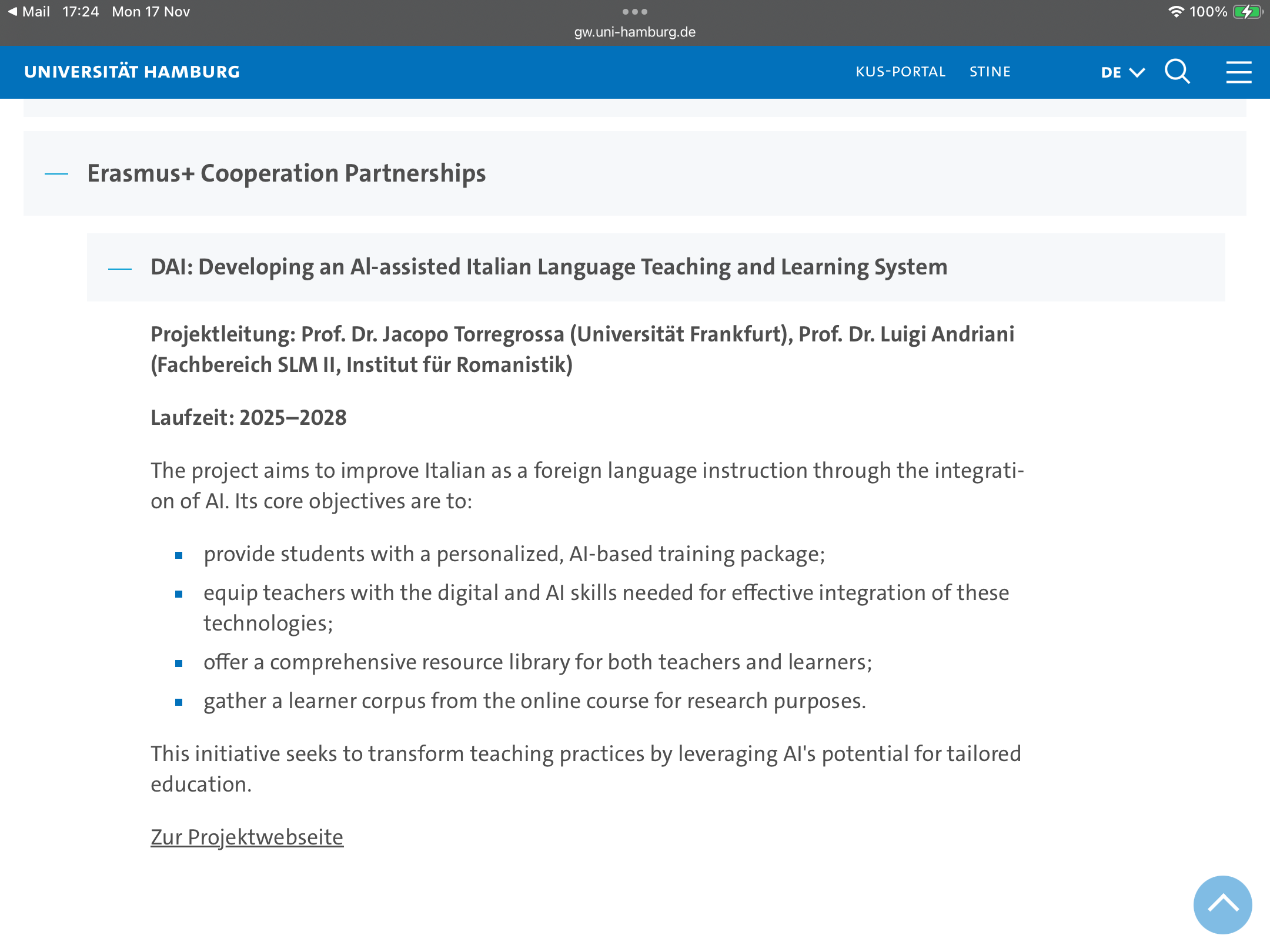
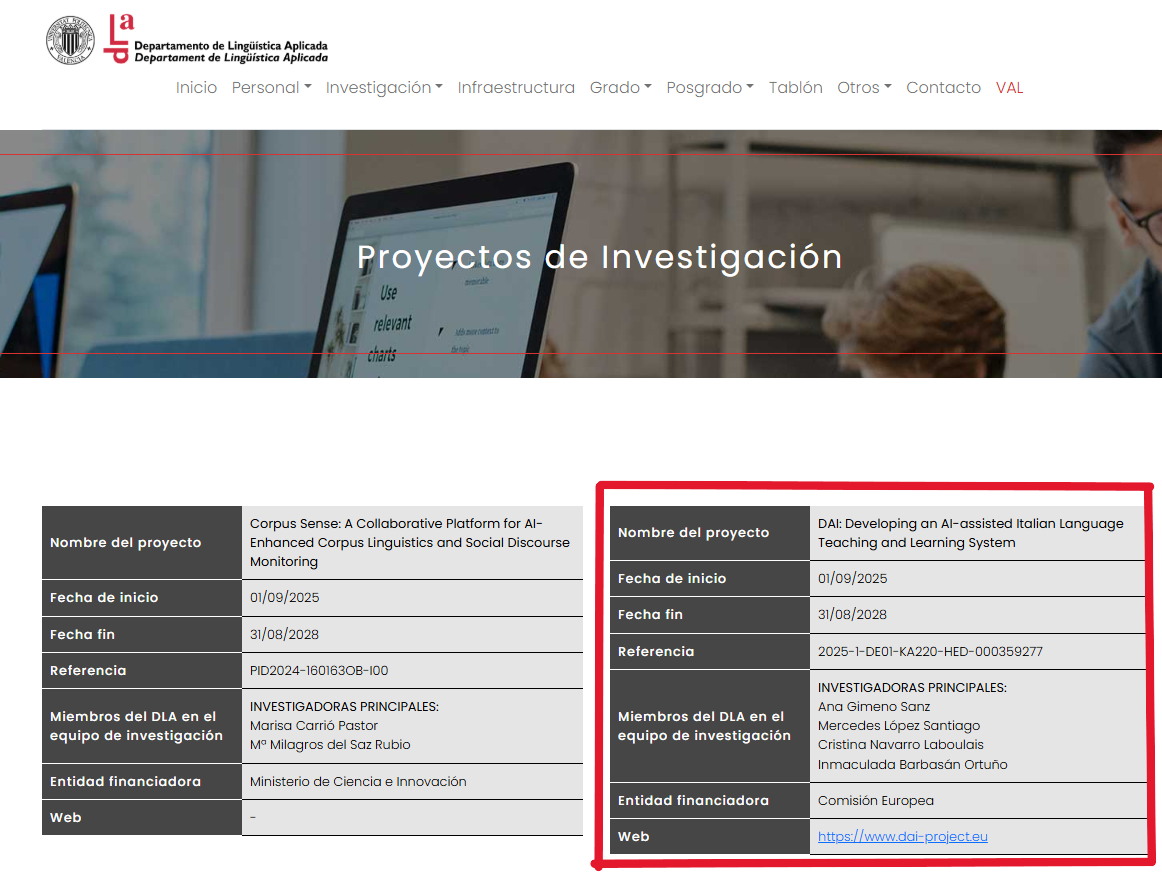
DAI-Project @ Universität Hamburg

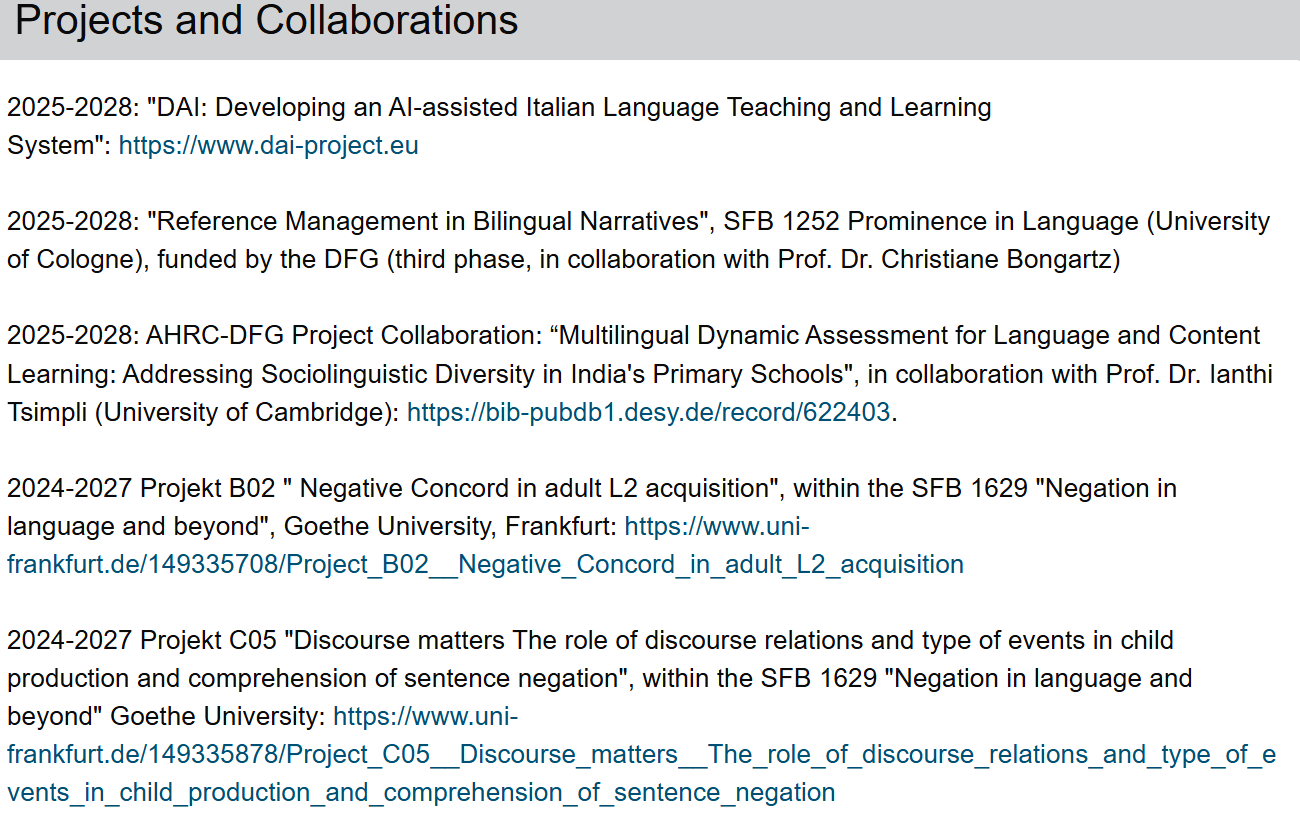
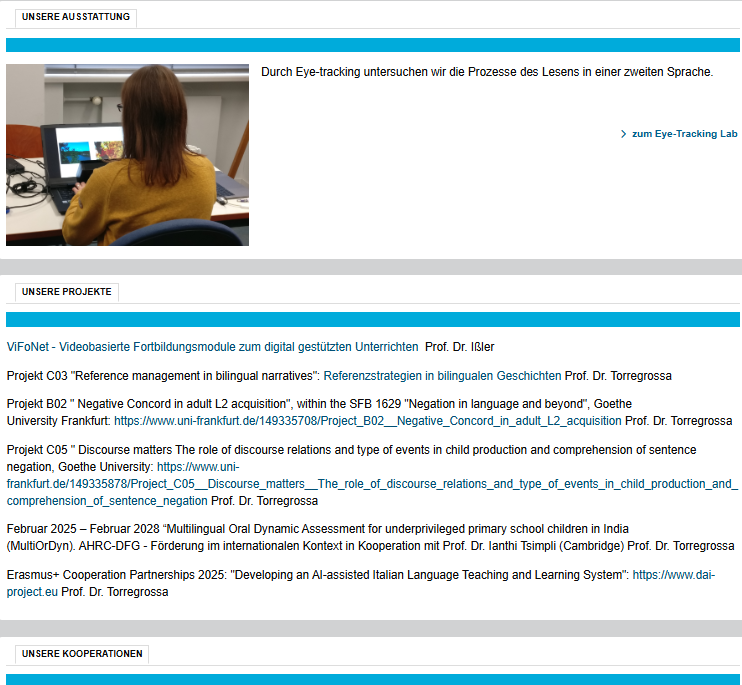
The DAI-Project now features in the list of European grants awarded to members of the Faculty of Humanities of the University of Hamburg, Germany.


AVTIA

The AVTIA project aims to develop new innovative content that provides lecturers in Higher Education Institutions (HEIs) with knowledge and materials in the form of open online courseware (OPC) to teach and assess inclusion in audiovisual translation/subtitling for the deaf and hard of hearing, and audio description for the blind and partially sighted; build and consolidate the required knowledge and skills of university students (including freelance translators) specializing in audiovisual translation through autonomous learning, preparing them for current labor market needs; generate attitude change and raise awareness among HEIs and stakeholders regarding the disparity in the range of inclusion services provided in different EU member states and the obligation to ensure access to public information for people with disabilities within national legislation. . The website of the project reports a link to the DAI project from the Press and Media section.


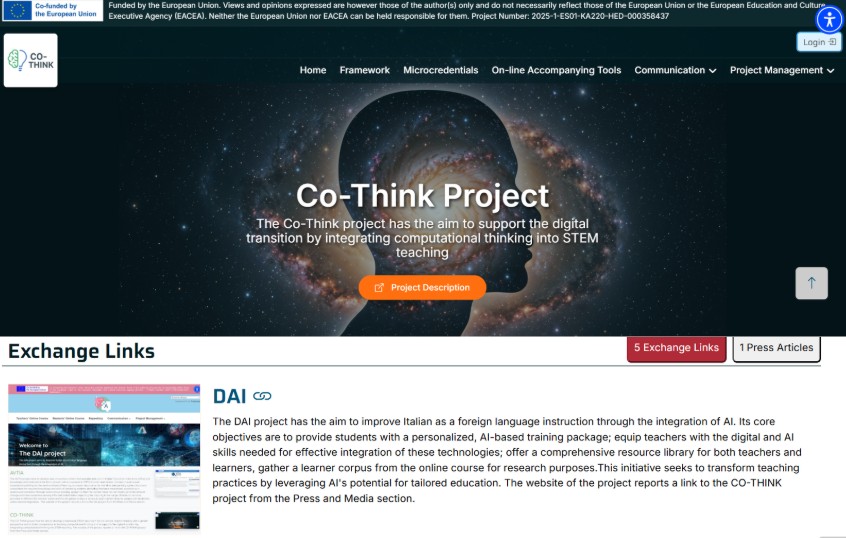
CO-THINK

The CO-THINK project has the aim to develop a functional STEAM approach for pre-service teacher training with a gender perspective and to foster competence in teaching computational thinking and to supports the digital transition by integrating computational thinking into STEM teaching. The website of the project reports a link to the DAI project from the Press and Media section.


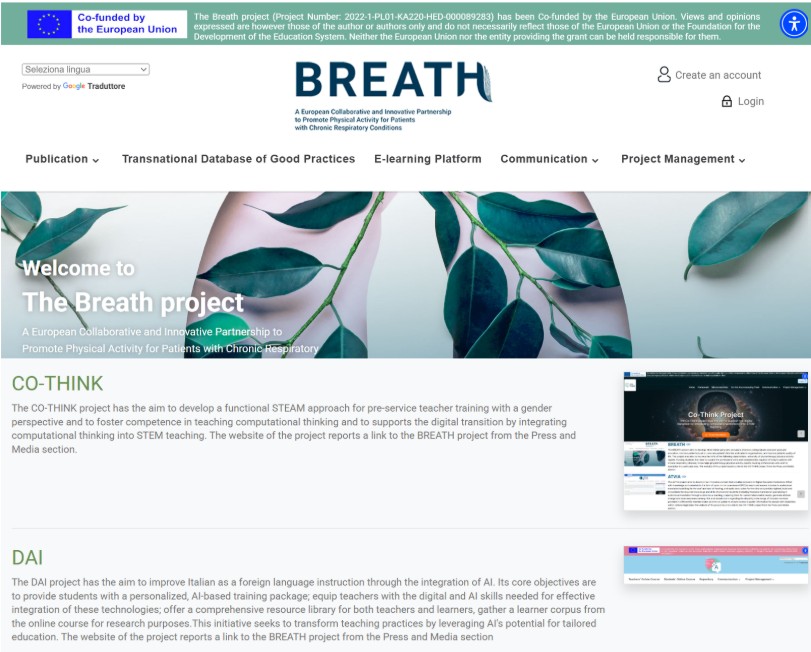
BREATH

The BREATH project aims to develop rehabilitation programs and plans, improve undergraduate and post-graduate education, improve patient education, educate patient's families and patients organizations, and improve patients quality of life. The project also aims to improve the skills of the following stakeholders: university of physiotherapy/ physical activity /sports /nursing students that need to acquire the professional skills and competencies required of today’s patients with chronic respiratory disease; it also helps physiotherapy/ physical activity /sports /nursing professionals who wish to specialize in a particular area. The website of the project reports a link to the DAI project from the Press and Media section


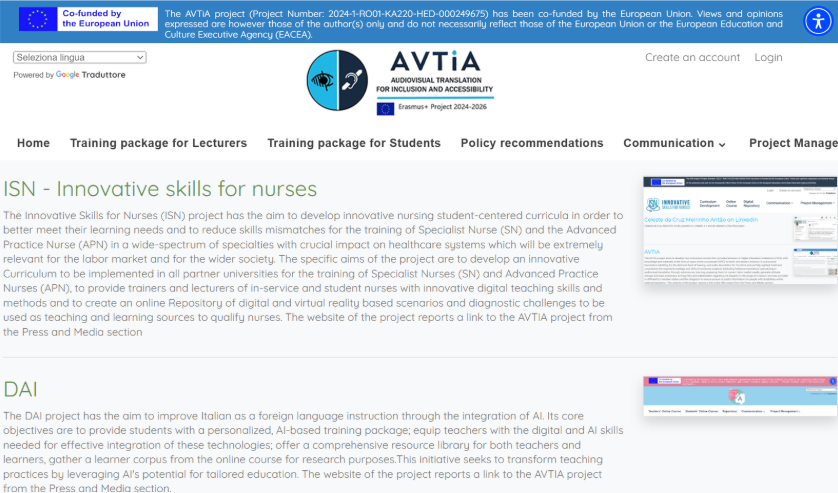
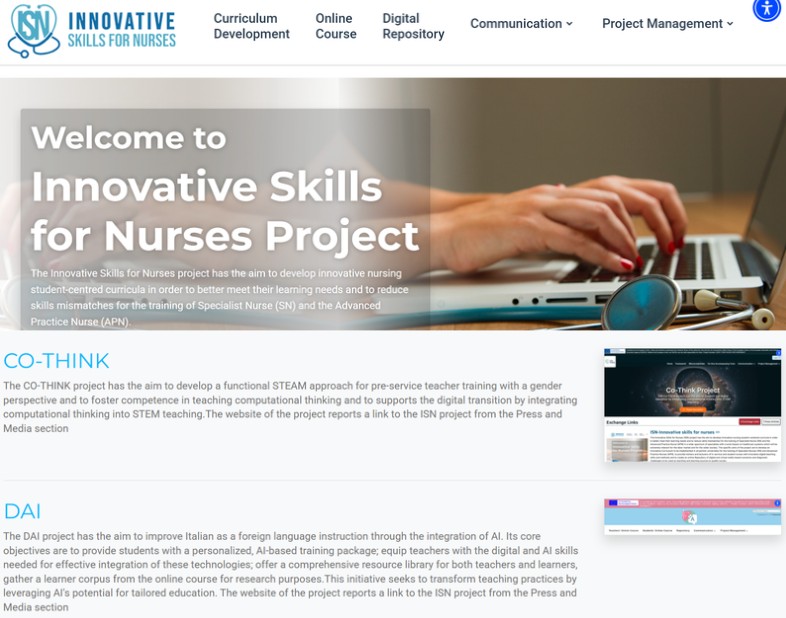
ISN - Innovative skills for nurses

The Innovative Skills for Nurses (ISN) project has the aim to develop innovative nursing student-centered curricula in order to better meet their learning needs and to reduce skills mismatches for the training of Specialist Nurse (SN) and the Advanced Practice Nurse (APN) in a wide-spectrum of specialties with crucial impact on healthcare systems which will be extremely relevant for the labor market and for the wider society. The specific aims of the project are to develop an innovative Curriculum to be implemented in all partner universities for the training of Specialist Nurses (SN) and Advanced Practice Nurses (APN), to provide trainers and lecturers of in-service and student nurses with innovative digital teaching skills and methods and to create an online Repository of digital and virtual reality based scenarios and diagnostic challenges to be used as teaching and learning sources to qualify nurses. The website of the project reports a link to the DAI project from the Press and Media section


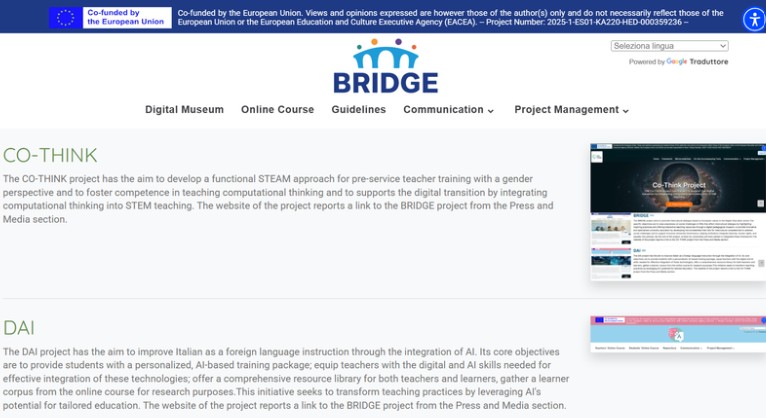
BRIDGE

The BRIDGE project aims to promote intercultural dialogue based on European values in the Higher Education sector.The specific objectives are to raise awareness on social challenges in HEIs that affect intercultural dialogue by highlighting inspiring practices and offering interactive teaching resources through a digital pedagogical museum, to provide innovative and specialized university education by developing microcredentials that train for intercultural competencies to address social challenges and to support Inclusive University Governance, helping institutions integrate diversity, human rights, and equality into policies. By the end of the project, at least six universities will have piloted or integrated these frameworks. The website of the project reports a link to the DAI project from the Press and Media section


Connected for Health

The Connected For Health project has the aim to provide lecturers/ trainers in universities with skills, knowledge, methods and tools to explore and address teaching/training obesity and EDs trough a trans-disciplinary approach, help residents and students consolidate their knowledge and skills in approaching patiences with obesity and eating disorders, support specialists in different medical fields to acquire new trans-disciplinary knowledge and skills to deal with these patiences. The website of the project reports a link to the DAI project from the Press and Media section


STEAM-ACTIVE

The purposes of STEAM-Active project are to improve the capacity of the higher education educational offer in engineering of new learning and teaching methods; to tackle engineering student underachievement and gender inequality; to provide university lecturers with STEAM based methodological approaches and teaching tools; and to provide universities with consistent, re-usable and up-scalable teaching-Learning sequences based on the STEAM methods. The website of the project reports a link to the DAI project from the Press and Media section.


COSY thinking

The Cosy-thinking project identifies three main specific objectives: to strengthen the collaboration among academic institutions provide them with a clearer picture of the range of opportunities between the universal and the particular; to provide academic lecturers and managerial staff with knowledge, skills and tools for adapting their educational activities with a specific focus on sustainable development and to provide undergraduate students with competences on complex systems thinking as a basis for sustainability action and make them employable in organizations interested to meet the sustainable development goals. The website of the project reports a link to the DAI project from the Press and Media section.


IHES

The purposes of IHES project is to develop and implement online programme on inclusion and independent living for people with intellectual disabilities in universities; to design and pilot a methodology to support inclusion of students with intellectual disabilities in the Higher Education (HE) systems; and to develop a set of recommendations to university policy and decision makers at HE level on how to promote inclusion of people with intellectual disabilities. The website of the project reports a link to the DAI project from the Press and Media section.


VIW-Voices of Immigrant Women

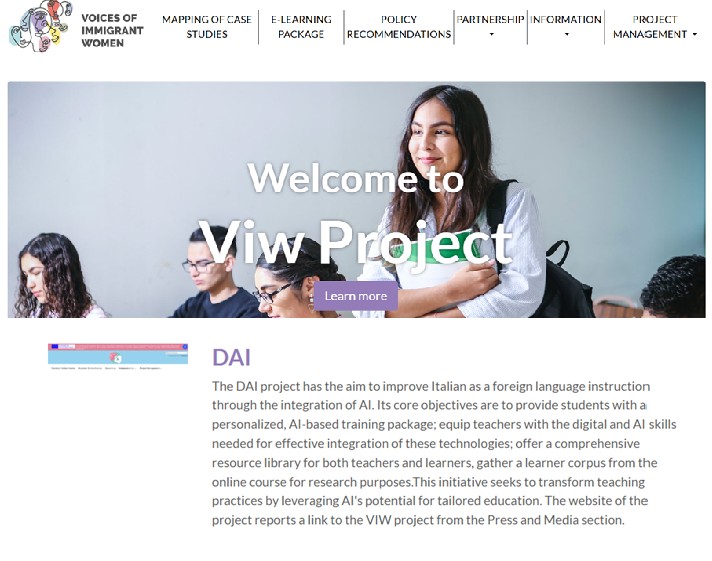
The VIW project aims to answer to the need of students of developing better knowledge and awareness toward the theme of woman migrations considering the interrelation of factors such as: gender, status, ethnicity, age, religion, origin, political opinion. The website of the project reports a link to the DAI project from the Press and Media section.


EME4EU

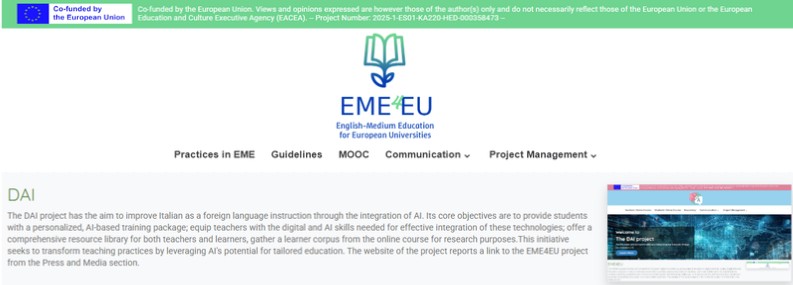
The EME4EU project has the aim to transform European Higher Education by empowering institutions to implement high-quality English Medium Education programs. It aims to enhance universities’ capacities, improve legislative frameworks, and foster collaboration among institutions, creating a globally competitive and inclusive education system. By addressing challenges like language barriers and resource gaps, the project promotes accessibility, innovation, and labor market alignment. The website of the project reports a link to the DAI project from the Press and Media section.


Univeristy of Malta

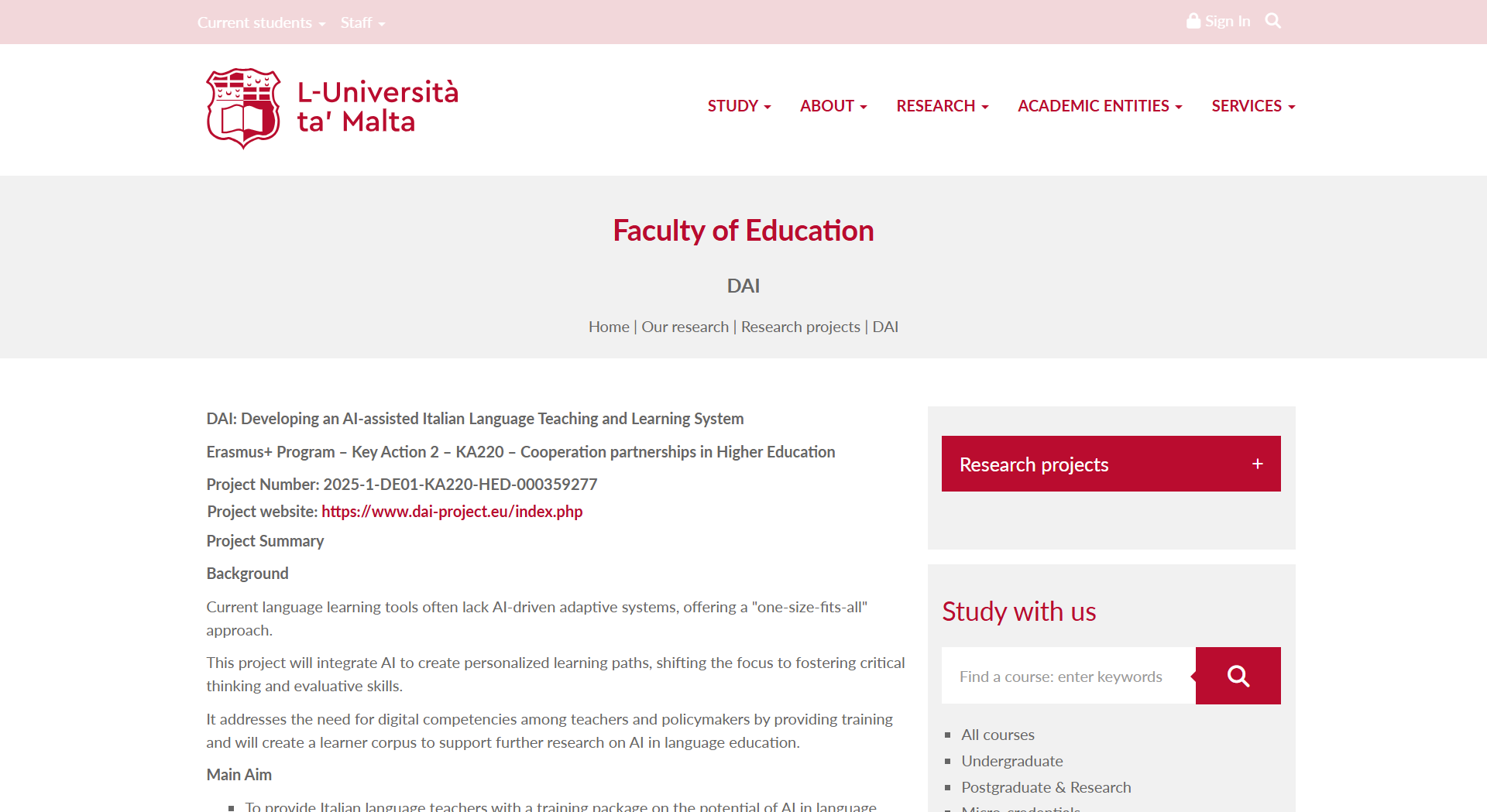
The University of Malta is a partner in the DAI project. The University’s website provides information about the project, together with a direct link to the DAI Portal. The website is visited by academics, students, researchers, educators, policy makers, and members of the wider public with an interest in education, training, and innovation. The University of Malta website receives approximately 600,000 visitors per year, offering significant visibility and outreach for the DAI project and enabling a wide audience to learn about and benefit from its outcomes.


Istituto Italiano di Cultura (IIC) – La Valletta

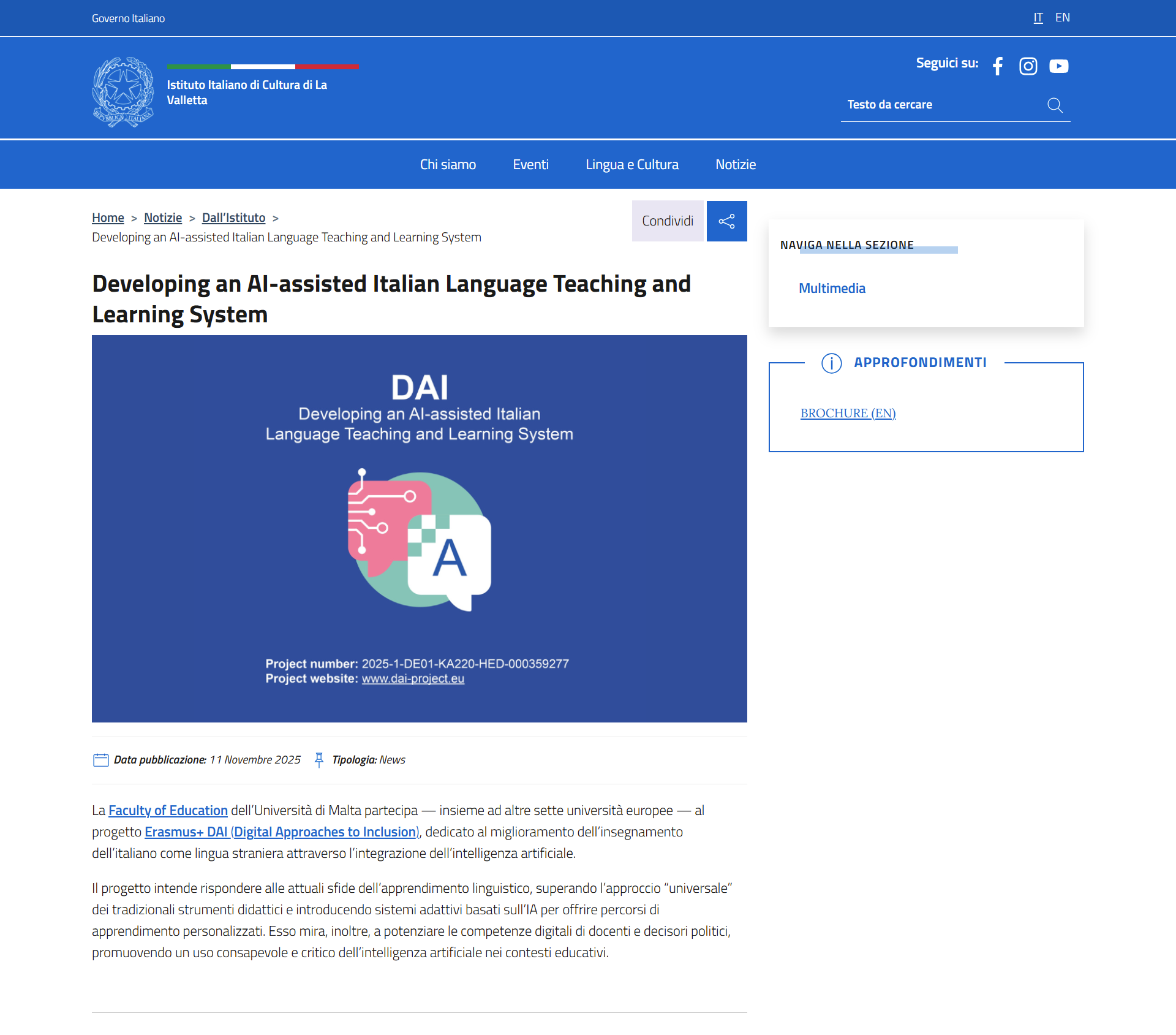
The Istituto Italiano di Cultura (IIC) – La Valletta maintains an official cultural website. The site provides information about the Institute’s mission, activities, cultural events, language and cultural programmes, library services, and provides access to news and updates. The website is visited by individuals interested in Italian language and culture, members of academic and cultural institutions, students, artists, and the local and international public engaged with cultural cooperation and events in Malta. The IIC Valletta website receives an estimated tens of thousands of visitors annually. Through the website, users can learn about and benefit from the Institute’s programmes and initiatives, including links to projects and cultural collaborations like the DAI project.


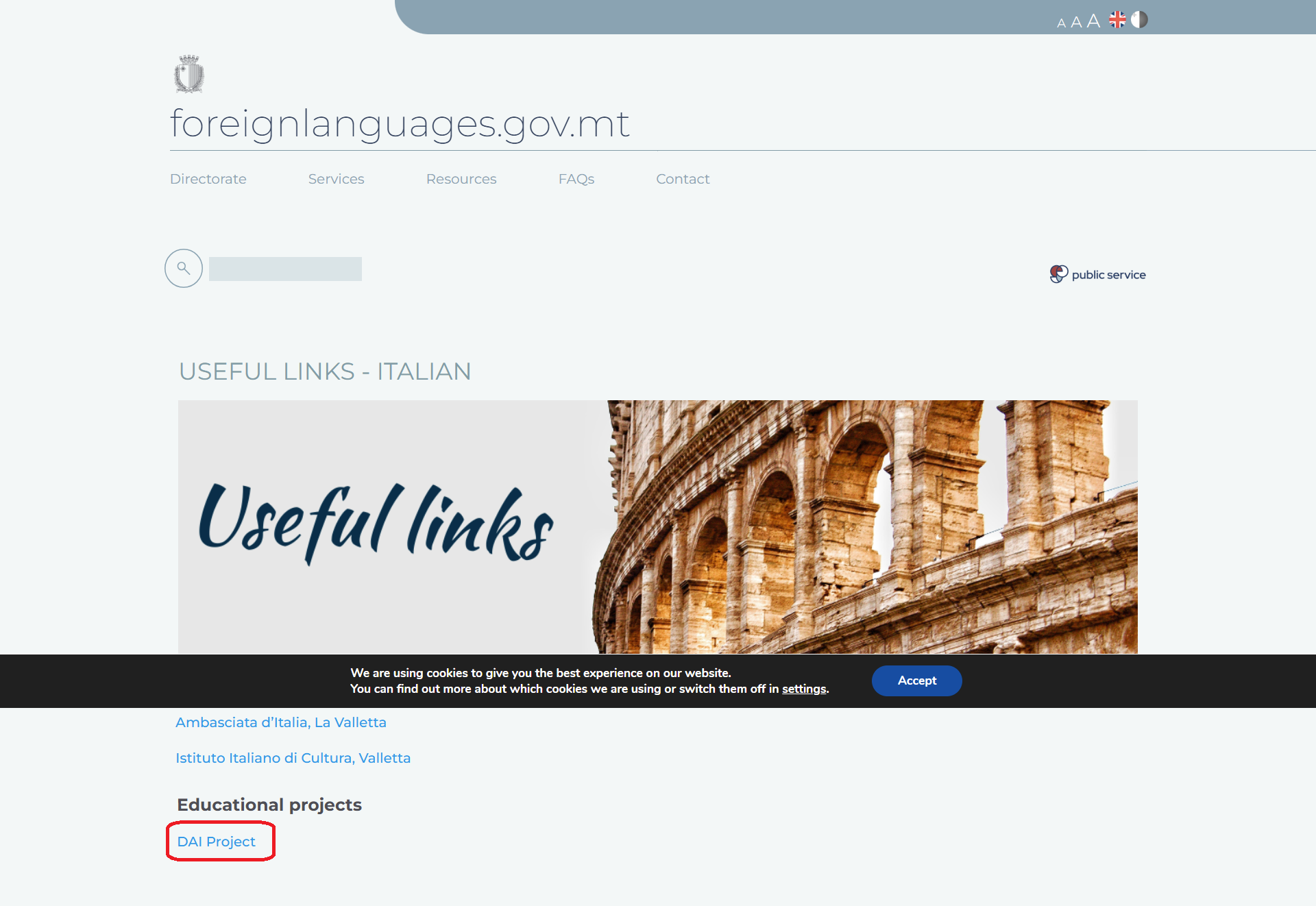
Foreign Languages website

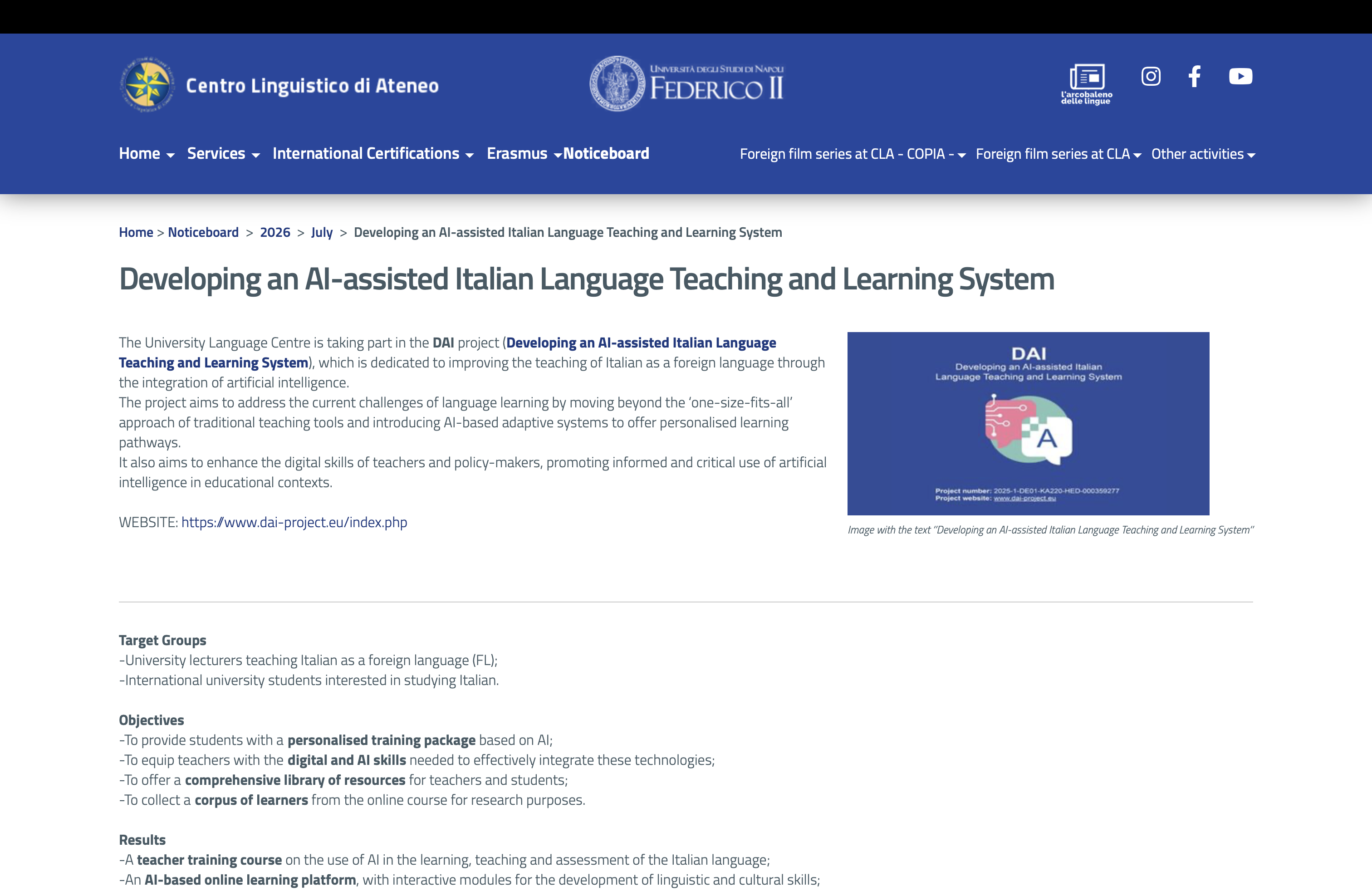
The “Useful Links – Italian” page on the Foreign Languages website provides curated resources and external links related to Italian language learning and cultural information. This page forms part of the broader Foreign Languages platform managed by the Maltese Government’s Directorate for Early Years, Languages and Humanities, which offers resources, curricula, and support for learners and teachers of Italian, French, German, Spanish, and other languages. The site is used by teachers, students, parents, and language enthusiasts in Malta to access syllabus materials, past papers, and quality external content linked from this page. Through this page, users can discover valuable Italian-language links and resources that support language learning and cultural engagement in Malta.


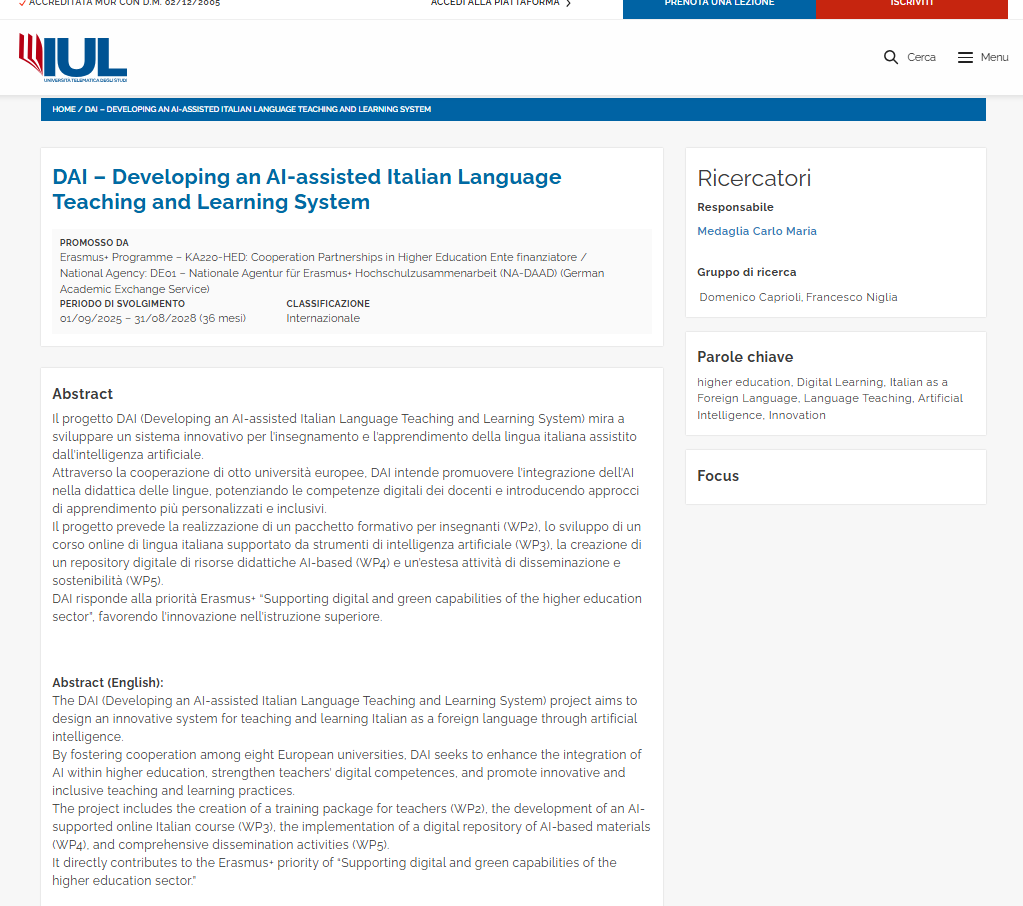
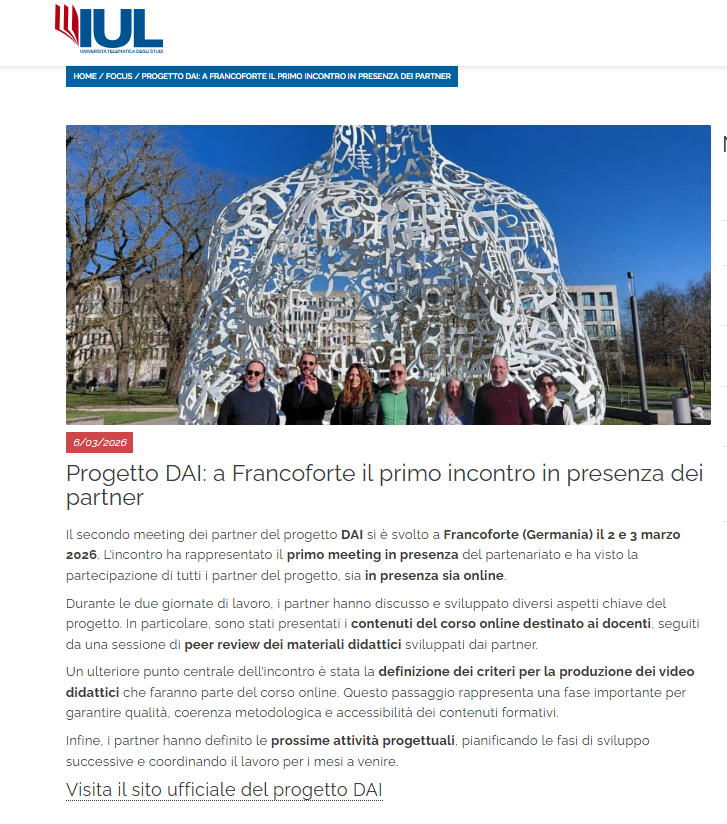
The DAI-Project now features in the list of European grants awarded to the IUL University, Italy.

The DAI (Developing an AI-assisted Italian Language Teaching and Learning System) project aims to design an innovative system for teaching and learning Italian as a foreign language through artificial intelligence. By fostering cooperation among eight European universities, DAI seeks to enhance the integration of AI within higher education, strengthen teachers’ digital competences, and promote innovative and inclusive teaching and learning practices. The project includes the creation of a training package for teachers (WP2), the development of an AI-supported online Italian course (WP3), the implementation of a digital repository of AI-based materials (WP4), and comprehensive dissemination activities (WP5). It directly contributes to the Erasmus+ priority of “Supporting digital and green capabilities of the higher education sector.”


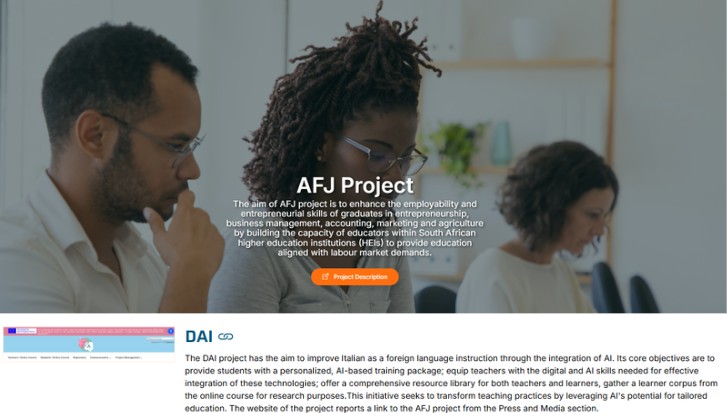
AFJ

The AFJ project has the aim to enhance the employability and entrepreneurial skills of graduates in entrepreneurship, business management, accounting, marketing and agriculture by building the capacity of educators within South African higher education institutions (HEIs) to provide education aligned with labour market demands. The website of the project reports a link to the DAI project from the Press and Media section.


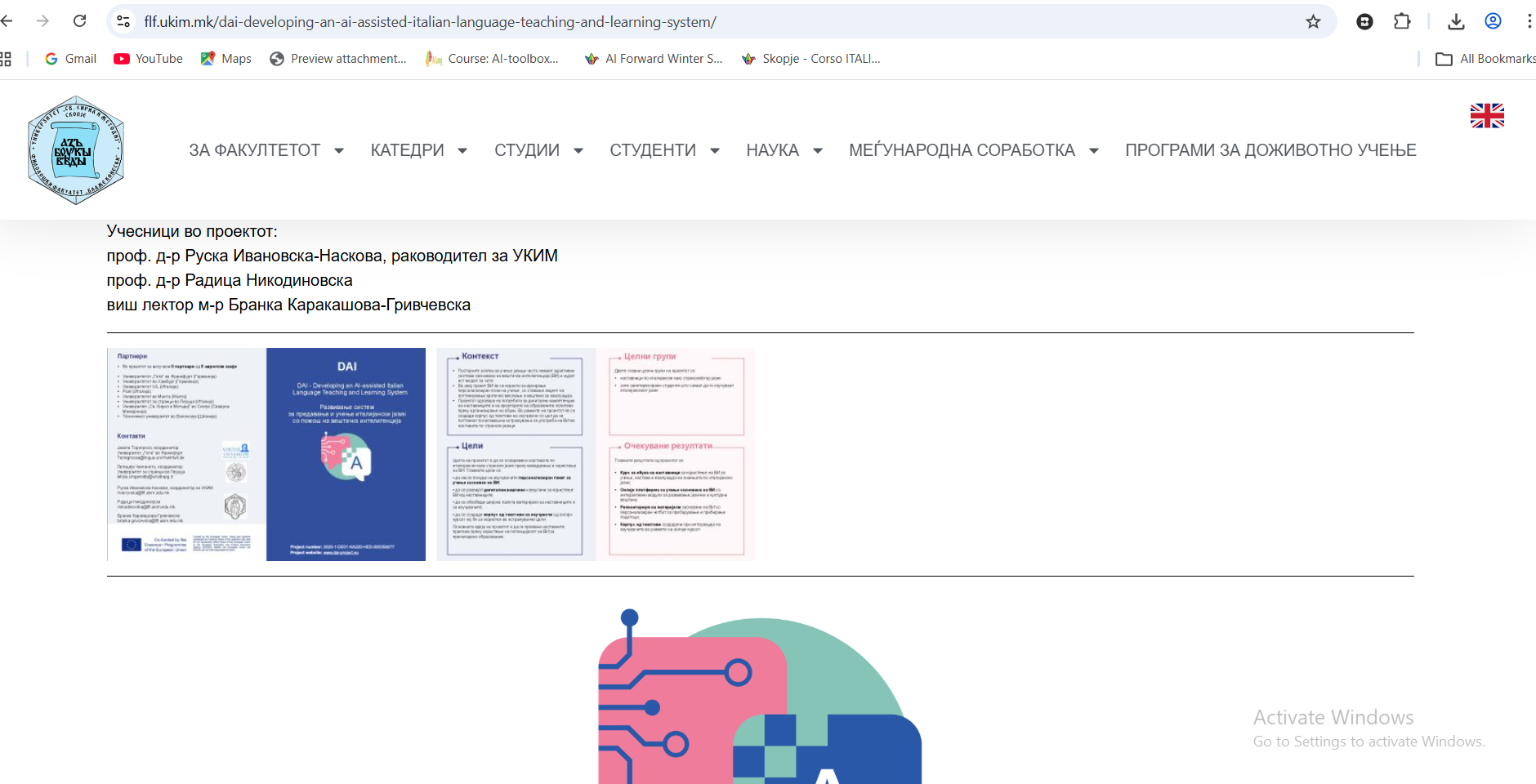
Ss. Cyril and Methodius University in Skopje, DAI brochure

The DAI brochure of Ss. Cyril and Methodius University in Skopje presents the project’s partners and participants and includes a direct link to the DAI portal, the aims and the aims and the outcomes The website is visited by all the students of the Faculty of Philology, national and international, language teachers, members of academic and cultural institutions, researchers and institutional partners interested in language education and international cooperation, entities and the local and international public. The website receives an estimated tens of thousands of visitors annually. The page is regularly visited by international and Italian students, language teachers, researchers and institutional partners interested in language education and international cooperation. Through this page they can easily access the DAI portal, learn more about the project and benefit from its resources and training opportunities.*